On May 29, the School of Mechanical Engineering, in collaboration with the Jiangsu University Undergraduate Student Party Committee, Hongjiang College, Mengxi College, Zhongling College, and the Jiangsu University Graduate Student Association, hosted a workshop on the use of academic tools for graduate students titled “Mastering and Applying Tools to Explore New Knowledge” in the lecture hall on the seventh floor of the Mechanical Engineering Building. The workshop featured Chen Saisa and Zhou Xiaocheng, graduate students from the School of Mechanical Engineering, as guest speakers, and was actively attended by students from the colleges and the school.
At the start of the event, host Shi Jiuyu briefly introduced the purpose of the session, emphasizing the important role that mastering academic tools plays in cultivating a research mindset, enhancing practical skills, and promoting efficient research and learning. He then invited two senior students with extensive experience in using academic tools to share practical research techniques.
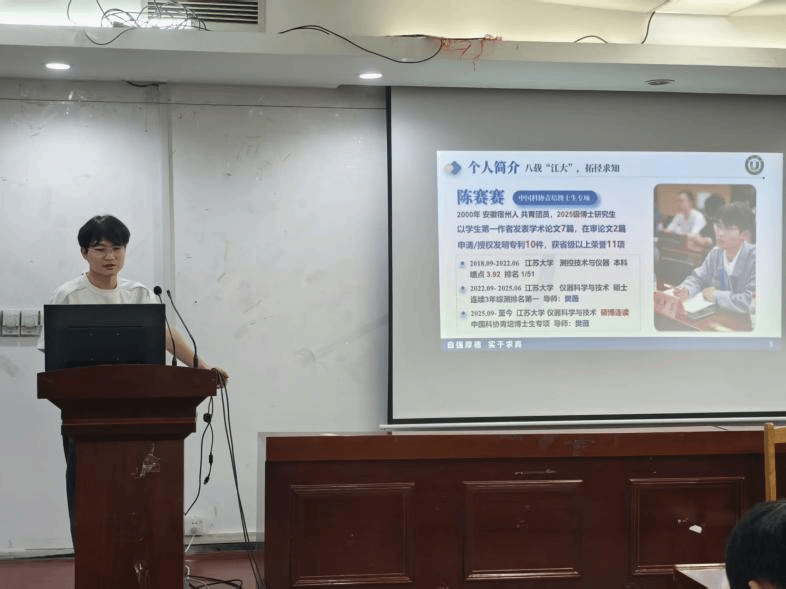
Drawing on his solid practical skills with academic tools and extensive hands-on research experience, Chen Saisa provided a systematic overview of the categories, core functions, and key practical considerations of commonly used academic tools. He focused on sharing practical insights regarding literature search and organization, thesis formatting and figure creation, and strategies for avoiding pitfalls when using these tools. He guided students on how to leverage professional academic tools to enhance their research work and optimize their research processes by adhering to key practical principles.
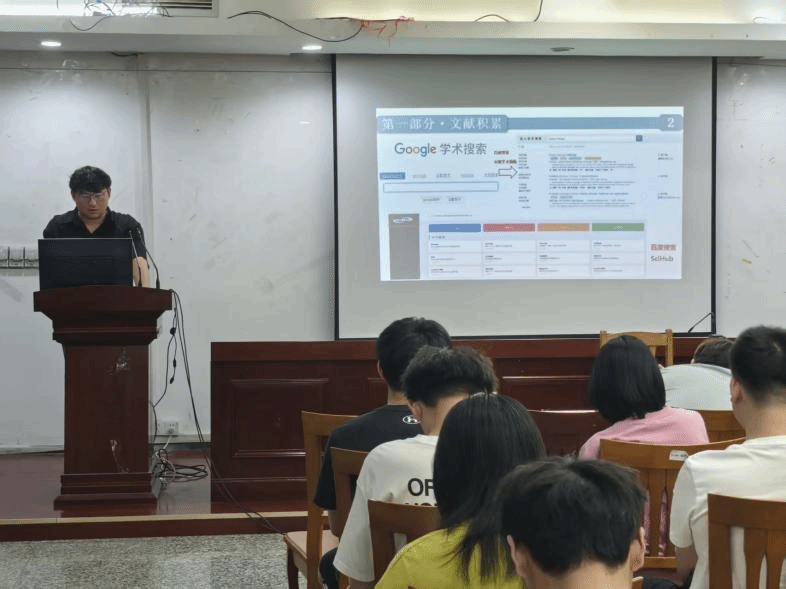
Drawing on his extensive practical experience in research and his expertise in the full-spectrum application of various academic tools, Zhou Xiaocheng delivered a presentation covering topics such as selecting research tools, refining software skills, optimizing research materials, and enhancing the quality and efficiency of daily research work. He emphasized that research and learning should make effective use of tools to boost efficiency, and encouraged underclassmen to take the initiative in learning and becoming proficient in using various academic tools.
This workshop on academic tool usage effectively helped participants master the full process—from tool selection and practical application to research empowerment—and addressed common challenges encountered when using research tools. It further ignited the enthusiasm and confidence of students across the college to delve deeper into academic pursuits and refine their research skills. The event fully demonstrated the School of Mechanical Engineering’s excellent academic tradition of “mentoring and guiding,” nurtured a culture of research and learning on campus, and laid a solid foundation for enhancing students’ research practice capabilities and fostering high-level academic achievements.