In nature, from the contraction of cardiac muscle to the flapping of insect wings, these periodic motions achieve remarkable energy efficiency through the synergistic nonlinear mechanical responses of soft structures and materials, serving as outstanding examples of biological autonomous motion. The intrinsic negative feedback mechanisms found in living organisms have inspired soft robotics, embedding feedback and control functions directly into the materials so that sustained motion can be generated with only a constant energy input, without the need for external time-varying signals. This paper classifies the control strategies for self-sustained motion in soft robots into six major categories: thermally driven, optically driven, photochemically driven, humidity-driven, topologically controlled, and negative feedback loops. This design philosophy reduces reliance on sensors, controllers, and batteries while enhancing response speed and environmental adaptability. However, how soft robots can achieve long-duration, highly robust autonomous motion in unstructured and complex environments while overcoming bottlenecks such as low energy conversion efficiency remains a critical challenge that urgently needs to be addressed.
Against this backdrop, the research group led by Professor Xu Lin from the School of Mechanical Engineering at Jiangsu University systematically reviewed the core mechanisms underlying self-sustained motion in soft robots. Based on the six major control strategies mentioned above, they classified the corresponding motion behaviors into five typical modes: self-sustained oscillation, rolling locomotion, structural obstacle avoidance, topological rotation, and nonlinear trajectory motion. By comparing various mechanisms across the dimensions of environmental adaptability, energy conversion efficiency, and motion performance, the team established a framework for correlating motion strategies with environmental characteristics. They also outlined the core challenges facing high-performance autonomous soft robots in unstructured environments and identified future research directions. This work was published under the title “Autonomous soft robotics: Revolutionizing motion with intelligence and flexibility” in the internationally renowned Elsevier journal *Advances in Colloid and Interface Science* (real-time impact factor: 22).
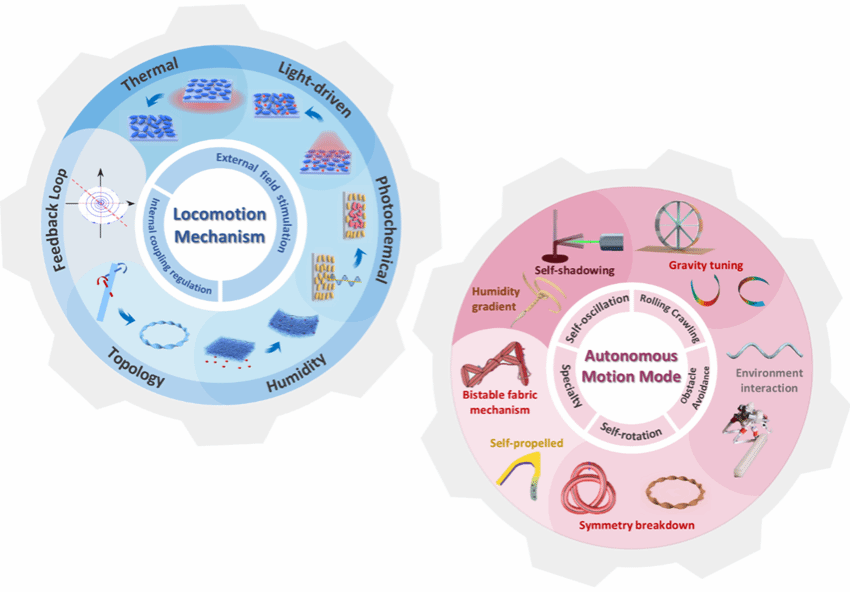
Fig. 1. Overview of the motion mechanism and motion forms of autonomous soft robots.
Figure 1 illustrates a framework for classifying self-sustained motion control strategies and typical motion patterns in soft robots. It categorizes existing research into six types of autonomous motion mechanisms based on stimulus sources and structural characteristics, including thermal drive, optical drive, photochemical drive, humidity drive, topological structure control, and negative feedback loops. Among these, thermal, optical, photochemical, and humidity drives primarily correspond to external energy input forms, while topological structure design and built-in feedback loops reflect internal coupling and control mechanisms within the system. In practical systems, autonomous motion typically arises from the synergistic interaction between external field inputs and internal structural or dynamic asymmetries. In terms of motion behavior, the autonomous motion of soft robots is further categorized into five representative behavioral patterns: self-sustained oscillation, rolling/crawling, structural obstacle avoidance, topological spinning, and special nonlinear motion. These motion processes typically arise from the evolution of non-equilibrium behavior induced by material responses, structural asymmetry, or coupling mechanisms.
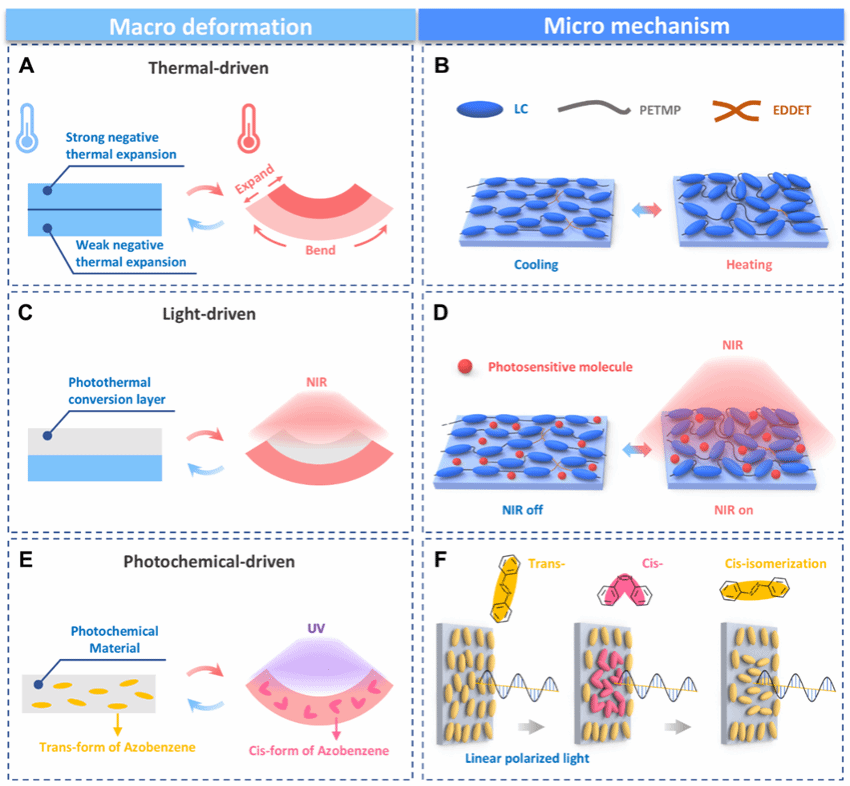
Fig. 2. Macro- and micro-level perspectives on autonomous movement mechanisms.
Figure 2 illustrates the mechanisms underlying various types of autonomous motion in soft robots from both macroscopic and microscopic perspectives. Figures A and B show the macroscopic morphology and microscopic structural features of a typical thermal bending mechanism based on a liquid-crystal elastomer, respectively; Figures C and D demonstrate the macroscopic motion patterns and microscopic response characteristics of the photothermal bending mechanism of a liquid-crystal elastomer driven by near-infrared light; Figure E depicts the macroscopic manifestation of the cis-trans isomerization of azobenzene molecules under illumination; Figure F reveals the intrinsic mechanism of the Weigert effect at the microscopic level.
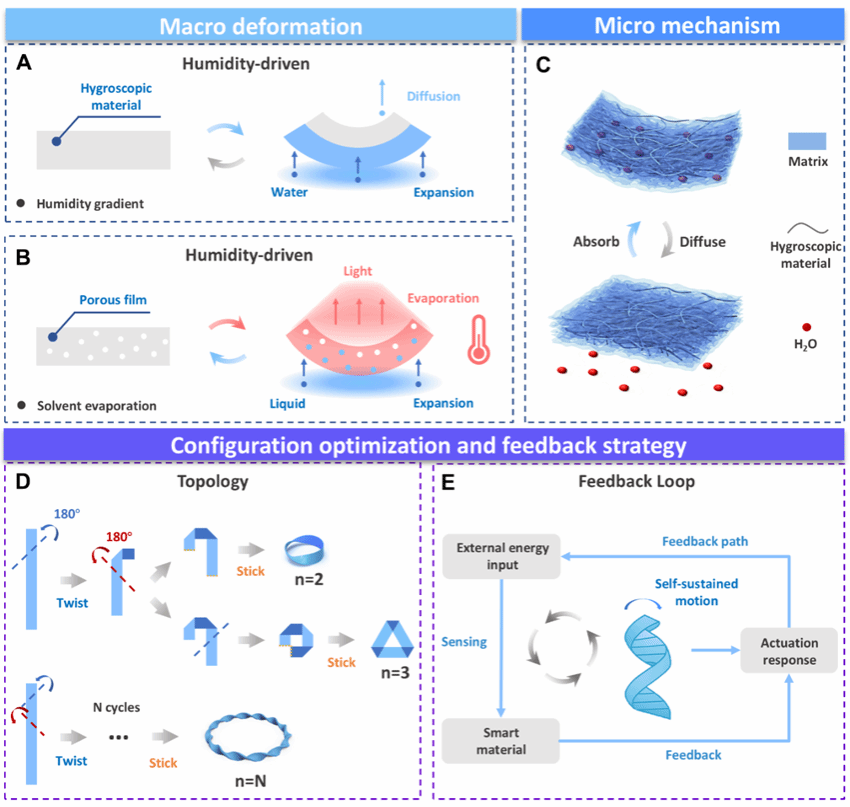
Fig. 3. Macro- and micro-level perspectives on autonomous movement mechanisms.
Figure 3 explains the mechanisms underlying various types of autonomous motion in soft robots from both macroscopic and microscopic perspectives. Figures A and B illustrate the macroscopic motion behaviors of two types of autonomous motion in soft robots: humidity gradient-driven and solvent evaporation-driven motion, respectively; Figure C provides a visual illustration, at the molecular scale, of the microscopic principles underlying the synergistic interactions between moisture-absorbing components within the composite matrix, clearly revealing the response mechanisms of humidity-driven motion; Figure D focuses on explaining topological configurations and zero-elastic potential modes, providing structural implementation pathways for soft robots to achieve sustained autonomous motion; Figure E depicts a typical negative-feedback closed-loop control model for soft robot autonomous motion.
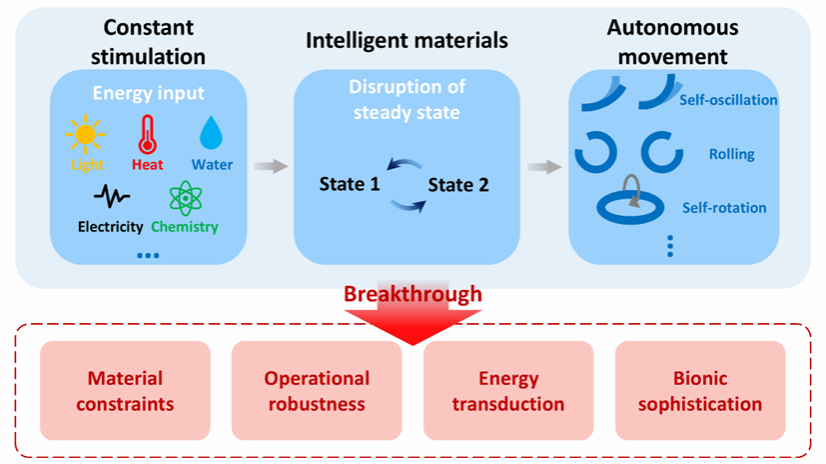
Fig. 4. The current state and future prospects of soft robots capable of autonomous motion.
Figure 4 illustrates the core logic behind steady-state failure and autonomous motion in soft robots under constant environmental stimuli, achieved through the response of smart materials. It clearly demonstrates the intrinsic relationship between energy inputs—such as light, heat, humidity, chemicals, and electric fields—and typical motion forms, including self-sustained oscillation, rolling, and self-rotation. At the same time, it identifies key future breakthrough directions for autonomous soft robots across four dimensions: multiscale material innovation, hierarchical structural design, efficient energy conversion, and the enhancement of biomimetic intelligence.
In addition, the article summarizes five representative behavioral patterns of autonomous soft robots, including self-sustained oscillation, rolling/crawling, structural obstacle avoidance, topological spinning, and special nonlinear motion, and systematically reviews their locomotion performance and adaptability in terrestrial, underwater, aerial, and complex multi-scenario environments. The authors also point out that, for truly system-level autonomous soft robots, future research must focus on achieving breakthroughs in four key areas: multiscale material innovation, hierarchical structural design, efficient energy conversion, and enhanced biomimetic intelligence. Ultimately, the research and development of high-performance autonomous soft robots is, at its core, a highly interdisciplinary innovation process that relies on deep collaboration across multiple fields, including chemistry, materials science, mechanics, physics, robotics, and biology. Future autonomous soft robots will be capable of drawing direct power from natural energy sources such as ambient light, heat, and humidity. They will possess the ability to move stably and autonomously, switch between multiple modes, perceive their environment, and make intelligent decisions, while gradually achieving coordinated group operations. This will better address the urgent needs of practical engineering applications such as medical interventions, environmental detection, flexible operations, and intelligent equipment.
Master’s students Liu Boyu and Zhang Lizhi are the co-first authors of the paper; Professor Xu Lin is the corresponding author; and Professor Ding Jianning of Yangzhou University and Associate Professor Wang Ben of Shenzhen University are co-authors. This work was supported by grants from the National Natural Science Foundation of China (52275290, 52475308), a research project from the State Key Laboratory of Mechanical Systems and Vibration (MSV202419), and an open project from the Shanghai Key Laboratory of Flexible Medical Robotics (SKLFMR-101), among others.
Thesis Information:
Boyu Liu, Lizhi Zhang, Ben Wang, Jianning Ding, Lin Xu*. Autonomous Soft Robotics: Revolutionizing Motion with Intelligence and Flexibility. Advances in Colloid and Interface Science, 2026, 103911.
https://doi.org/10.1016/j.cis.2026.103911